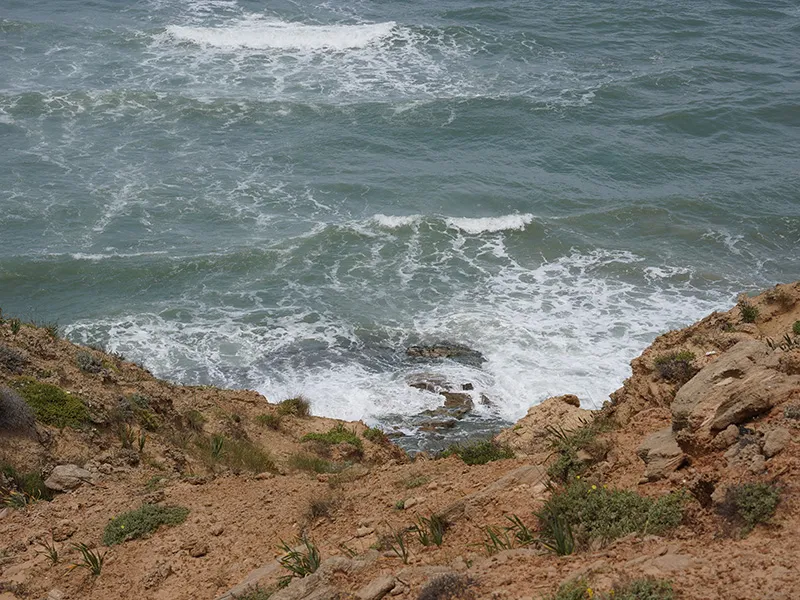





















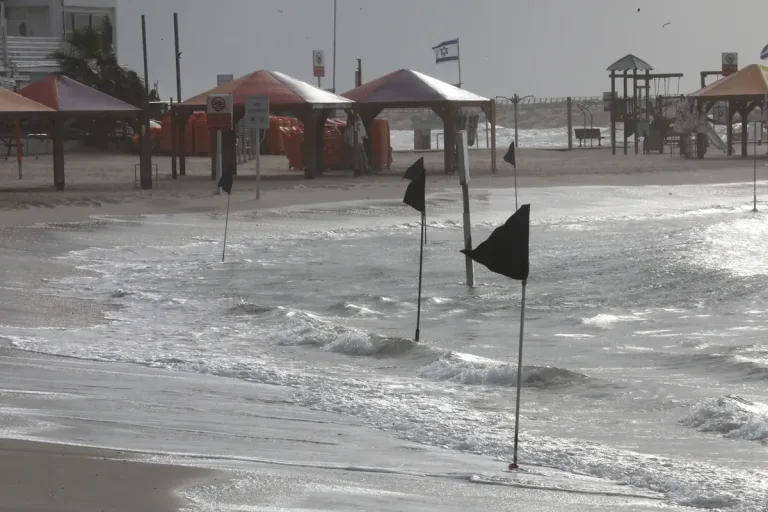
Jerusalem, 26 February, 2026 (TPS-IL) — A new Israeli study suggests that a surprising clue hidden in the Aegean Sea could help predict how wet or dry winters will be in Israel and the Eastern Mediterranean months in advance. By tracking how much heat the sea releases each August, scientists say they can forecast rainfall with far greater accuracy than before, offering communities and farmers valuable time to prepare for droughts or heavy storms.
Researchers at Hebrew University in Jerusalem have developed the Aegean Sea Heat Uptake Anomaly (AQA) index, which measures fluctuations in heat released by the Aegean Sea each August. Their findings show that this localized ocean signal predicts rainfall in Israel and neighboring countries more accurately than traditional global indicators such as El Niño or the North Atlantic Oscillation. El Niño is a periodic warming of the central and eastern tropical Pacific Ocean that influences global weather patterns, while the North Atlantic Oscillation is a climate pattern in the North Atlantic that affects the strength and direction of westerly winds and storm tracks across Europe and the Mediterranean.
The study, led by Prof. Ori Adam and graduate student Ofer Cohen, with collaborators including Dr. Assaf Hochman, Prof. Hezi Gildor, Prof. Dorit Rostkier-Edelstein, and Dr. Ehud Strobach, analyzed satellite and observational data from 1979 to 2023. They identified three primary patterns of sea surface temperature and heat uptake variability in the Mediterranean. Two of these patterns, previously unnoticed in seasonal forecasting, were strongly linked to winter precipitation in the Levant. These insights formed the basis of the AQA index, which calculates deviations in the net heat exchange between the Aegean Sea and the atmosphere in late summer.
The study revealed that negative AQA values, when the Aegean Sea emits more heat than average, lead to wetter winters, with more frequent and persistent Cyprus Low storms, the main rain-bearing systems for Israel. These conditions are reinforced by an intensified subtropical jet stream, creating unstable atmospheric patterns conducive to storm development. The index explains roughly one-third of year-to-year rainfall variability in the Levant, a level of predictive skill unmatched by global climate indicators.
“The Mediterranean Sea acts as the primary moisture source and driver of weather systems for our region,” the scientists said. “This research demonstrates that summer processes in the sea can predict winter outcomes several months ahead, a remarkable result given the inherently chaotic nature of weather systems. Integrating the AQA index into existing seasonal models could significantly improve our ability to forecast water availability months in advance.”
The practical applications of the AQA index are wide-ranging. With months of lead time, water authorities can better manage reservoirs, aquifers, and desalination planning, preparing for wetter or drier winters before the season begins. Farmers can also adjust planting schedules, select crops better suited to expected rainfall, and optimize irrigation plans.
Beyond agriculture and resource management, the AQA index can help governments and municipalities prepare for extreme weather events. Predicting wetter winters allows for improved flood risk planning, while anticipating drier seasons supports drought mitigation strategies. Energy providers and water-dependent industries can optimize operations, and infrastructure can be stress-tested in advance to minimize disruptions caused by storms or water shortages.
“This discovery is a major step forward in understanding the links between regional ocean conditions and terrestrial rainfall,” said Prof. Adam. “It underscores the value of targeted, high-resolution climate analysis in improving seasonal prediction.”
The findings were published in the peer-reviewed journal Weather and Climate Dynamics.
Related Topics